The Most Common Causes of Uneven Concrete (and How Grinding Fixes Them)
Uneven concrete is a common problem property owners face in Fresno. Driveways, sidewalks, patios, and parking lots can shift or…
CA License #869767
Open Hours: Mon-Fri 8:00AM - 5:00PM
When you’re running a business in Fresno, your parking lot takes a beating. Between the 60+ days of triple-digit heat each summer and the Central Valley sun that seems to never quit, choosing the right paving material matters more here than in most places. If you’re building a new commercial parking lot or replacing a worn-out surface, you’re probably weighing asphalt against concrete. Both work, but one makes a lot more sense depending on your situation, budget, and how much time you want to spend thinking about your parking lot over the next 20 years.
Fresno isn’t just hot. It’s consistently, relentlessly hot. Summer temperatures regularly push past 100°F, and we’ve seen the thermometer climb above 110°F for days at a stretch. July averages nearly 100°F during the day, and that heat doesn’t just affect your AC bill.
How extreme heat impacts paving materials:
| Factor | Asphalt | Concrete |
| Heat absorption | High (dark surface) | Low (reflects sunlight) |
| Surface temperature | Can exceed 150°F | Stays cooler |
| Expansion/softening risk | Significant | Minimal |
| UV degradation | Oxidizes and fades | Resists UV damage |
Asphalt softens in extreme heat. That dark surface absorbs solar energy, which can cause the material to become pliable under heavy vehicles. If you’ve got delivery trucks or constant traffic during peak afternoon hours, concrete handles that stress better without deforming.
On the flip side, Fresno doesn’t deal with freeze-thaw cycles the way northern California does. Our mild winters mean neither material faces the cracking risk that comes from water freezing inside pavement. That’s actually good news for asphalt, since cold weather is typically where it outperforms concrete.
Let’s talk numbers. For most Fresno business owners, the installation cost matters because you’re trying to stretch your budget while still getting a professional result.
Typical commercial parking lot costs:
For a 10,000 square foot lot, that’s roughly $30,000 to $70,000 for asphalt versus $40,000 to $80,000 for concrete. The 20-30% savings on asphalt adds up fast for larger properties.
Installation time also differs. Asphalt can typically be laid and ready for traffic within 2-3 days. Concrete needs at least a week to cure before vehicles can use it. If minimizing business disruption matters, asphalt gets you back to normal operations faster.
Disclaimer: All prices listed are estimates and may vary based on project conditions. Please contact us for an exact quote.
Here’s where the conversation gets interesting. That lower upfront cost for asphalt comes with strings attached.
Asphalt maintenance requirements in Fresno:
Fresno’s intense UV exposure causes asphalt to oxidize faster than in milder climates. You’ll need to sealcoat your parking lot every 2-3 years to protect against sun damage and prevent the surface from becoming brittle. Understanding what sealcoating actually does helps you see why this isn’t optional here. Skip it, and you’re looking at common asphalt problems showing up years earlier than they should.
Cracks need immediate attention too. Water from our winter rains can penetrate small cracks and undermine the base, even without freeze-thaw issues. Crack sealing should happen as soon as you spot visible damage.
Concrete maintenance requirements:
Concrete needs less frequent attention. Joint sealing and occasional cleaning handle most maintenance tasks. However, when concrete does crack or develop problems, repairs cost more and are harder to blend seamlessly.
20-year maintenance cost comparison:
| Item | Asphalt | Concrete |
| Sealcoating (every 2-3 years) | $2,500-$4,500 per application | Not required |
| Crack repairs | Lower cost, more frequent | Higher cost, less frequent |
| Line striping (refresh) | Every 2-3 years | Every 3-5 years |
| Major resurfacing | Often needed at 15-20 years | Usually not needed |
| Estimated 20-year maintenance total | 50-80% of original cost | 20-30% of original cost |
Disclaimer: All prices listed are estimates and may vary based on project conditions. Please contact us for an exact quote.
For some properties, asphalt’s lifetime maintenance cost can approach or exceed the savings from cheaper installation.
Properly maintained asphalt in Fresno typically lasts 15-25 years. Concrete can last 30-40 years with basic care.
The catch? “Properly maintained” is doing a lot of heavy lifting in that sentence. An asphalt lot that gets regular sealcoating, prompt crack repairs, and professional maintenance will outlast a neglected concrete lot. But if you’re realistic about how much attention you’ll actually give your parking lot, concrete’s longer inherent lifespan provides more margin for error.
What kind of vehicles use your lot changes the equation.
Standard retail or office parking:
Cars and light trucks don’t stress pavement much. Either material works fine. Asphalt’s lower cost and easy repair makes it the practical choice for most standard commercial parking applications.
Heavy vehicle traffic:
Loading docks, trash compactor areas, and spots where delivery trucks idle for extended periods take a beating. Concrete handles point loads and heavy weights better because it doesn’t compress or deform. For these specific areas, even if you pave the main lot with asphalt, consider concrete pads where trucks park or turn frequently.
Drive-thru lanes:
The constant acceleration and braking in drive-thru areas creates shear stress that wears asphalt faster. Concrete often makes more sense for these high-stress zones.
Your parking lot is often the first thing customers see. A poorly maintained lot with potholes, faded striping, and cracks sends a message about how you run your business.
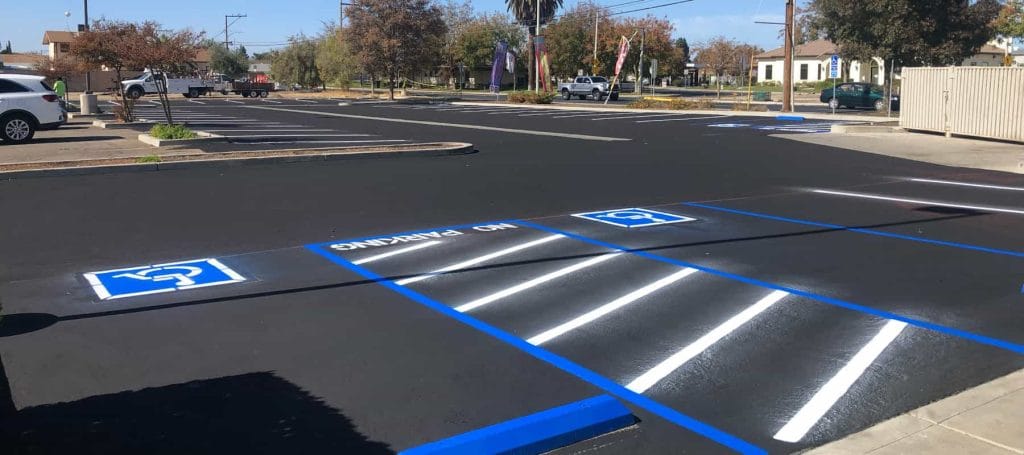
Fresh asphalt has that clean, dark appearance that photographs well and looks professional. The contrast with white striping creates clear, visible parking spaces. However, without regular maintenance, asphalt fades to gray and loses that polished look within a few years.
Concrete’s lighter color shows oil stains more readily. If you’re running a business where vehicles tend to leak fluids, those stains will be visible and require more cleaning to maintain appearances.
Fresno already struggles with heat. Dark asphalt surfaces absorb solar radiation and re-emit it as heat, making the surrounding area even hotter. This matters if you’re located in a dense commercial area or if your employees and customers have to walk across your lot in summer.
Concrete reflects more sunlight, contributing less to urban heat buildup. It can also reduce your building’s cooling costs by not heating up the area right outside your doors. Some municipalities are beginning to encourage or require high-albedo (reflective) surfaces for environmental reasons.
Damage happens. How you deal with it depends on what you’ve got.
Asphalt repairs:
Small problems like cracks and minor patching are straightforward and relatively cheap. New asphalt blends reasonably well with existing surfaces. For moderate damage, overlays can extend your lot’s life without complete replacement. When the base fails or damage is extensive, full-depth repairs or replacement are the only real options.
Concrete repairs:
Patching concrete is more expensive and rarely matches the original appearance exactly. Cracks often require cutting out damaged sections and replacing them entirely. On the plus side, you’ll need these repairs less frequently.
Choose asphalt when:
Choose concrete when:
Consider a combination when:
Many commercial properties use both materials strategically. Asphalt for the main parking area keeps costs reasonable, while concrete at loading docks, drive-thru lanes, and high-stress areas provides durability where it matters most.
Whatever you choose, Fresno’s specific climate challenges should inform how you approach installation and maintenance. The Central Valley sun is brutal on pavement. A maintenance plan tailored to our conditions, not generic national recommendations, makes the difference between a parking lot that lasts and one that needs replacement years ahead of schedule.
Different asphalt mixes perform differently in extreme heat. Eco-friendly paving options can reduce heat absorption while maintaining durability. These details matter when you’re investing in a surface that needs to perform for decades.
There’s no universally right answer here. Asphalt costs less upfront and repairs easily, but demands more maintenance in Fresno’s harsh climate. Concrete costs more initially but needs less attention and handles our extreme heat better.
For most Fresno businesses with standard traffic patterns and tight budgets, asphalt with a solid maintenance plan delivers good value. For businesses with heavy vehicle traffic, long ownership timelines, or strong concerns about maintenance commitments, concrete’s higher initial investment often pays off.
Either way, proper installation by experienced contractors and a realistic maintenance plan matter more than the material itself. A well-maintained asphalt lot will outlast neglected concrete every time.