The Most Common Causes of Uneven Concrete (and How Grinding Fixes Them)
Uneven concrete is a common problem property owners face in Fresno. Driveways, sidewalks, patios, and parking lots can shift or…
CA License #869767
Open Hours: Mon-Fri 8:00AM - 5:00PM
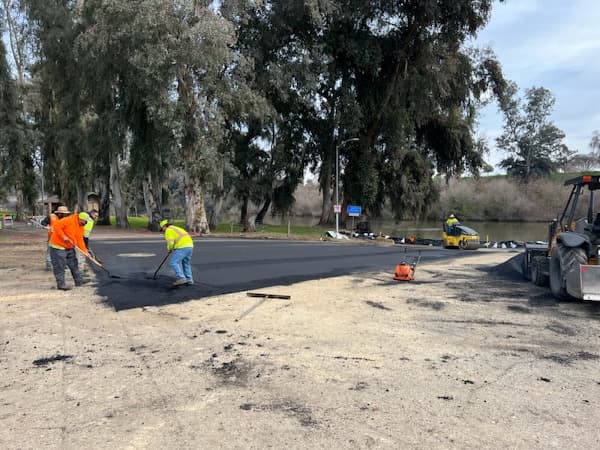
Your parking lot is starting to show its age. Cracks are spreading, the surface looks faded, and you’re getting complaints about potholes. The question every Fresno business owner faces at this point: do you resurface what you have, or tear it all out and start fresh?
The answer depends on what’s happening beneath the surface, not just what you can see on top. An overlay costs significantly less and gets you back in business faster, but it only works when your foundation is still solid. Full replacement costs more upfront but solves problems that overlays simply cannot fix. Getting this decision wrong means either spending money you didn’t need to spend, or watching your “new” parking lot fall apart within a few years.
Asphalt overlay adds a fresh layer of pavement, typically 1.5 to 2 inches thick, directly over your existing surface. The old asphalt stays in place. A contractor mills down transitions at curbs, sidewalks, and garage entries to maintain proper elevation, applies a bonding agent, then lays new hot-mix asphalt on top.
Full replacement removes everything down to the base layer, and sometimes the base itself. The contractor excavates all existing asphalt, inspects and repairs the foundation, then builds a completely new pavement structure from the ground up.
The fundamental question is whether your parking lot’s problems are surface-level or structural. Surface damage responds well to overlays. Structural damage requires replacement.
An overlay is the right choice when your parking lot has cosmetic issues but the underlying structure remains sound. Think of it like refinishing hardwood floors versus replacing the subfloor. If the bones are good, you can work with what you have.
Good candidates for overlay:
Your lot qualifies for an overlay when the base layer is stable and drains properly, surface cracks are narrow (less than 1/4 inch wide) and infrequent, there’s no evidence of base failure like widespread alligator cracking or deep depressions, the pavement hasn’t already had multiple overlays (which creates drainage and elevation issues), and there’s adequate clearance at curbs and transitions to accommodate the added height.
Benefits of choosing overlay:
The cost difference is substantial. Overlays typically run $2 to $5 per square foot for commercial lots, compared to $5 to $10 or more for full replacement. For a 20,000 square foot parking lot, that’s potentially $60,000 to $100,000 in savings.
Time matters too. An overlay can often be completed in 2-3 days with the surface ready for traffic within 24-48 hours. Full replacement takes 1-2 weeks minimum, with significant portions of your lot unusable during construction. For businesses that depend on customer access, that downtime has real costs.
Overlays also generate less waste. Instead of hauling away tons of demolished asphalt and bringing in entirely new material, you’re adding a relatively thin layer to what already exists.
Disclaimer: All prices listed are estimates and may vary based on project conditions. Please contact us for an exact quote.
Some parking lots are past the point where an overlay can help. Putting new asphalt over a failing foundation is like painting over water damage. It looks better temporarily, but the underlying problem will resurface, often literally.
Signs you need full replacement:
Alligator cracking across large sections indicates base failure. This interconnected pattern of small cracks resembles reptile skin and means the pavement structure has lost its ability to distribute loads properly. No amount of surface treatment fixes this.
Deep potholes that keep returning after repairs suggest the base has deteriorated. Water is getting into the foundation, softening the aggregate, and creating voids that no patch can permanently fill.
Standing water or drainage problems mean the lot’s grade isn’t working. An overlay maintains existing grades. If water pools instead of flowing to drains, you need the foundation reworked.
Multiple previous overlays have already raised the surface to problematic heights. Each overlay adds 1.5 to 2 inches. After two or three layers, you’re dealing with drainage issues, trip hazards at transitions, and reduced curb heights that cause problems with stormwater flow.
Extensive areas requiring repair before overlay would eat up the cost savings. If more than 25-30% of the surface needs significant work before you can overlay, replacement becomes more economical.
Let’s look at realistic numbers for commercial parking lots:
| Item | Overlay | Full Replacement |
| Cost per square foot | $2 – $5 | $5 – $10+ |
| 10,000 sq ft lot | $20,000 – $50,000 | $50,000 – $100,000+ |
| 20,000 sq ft lot | $40,000 – $100,000 | $100,000 – $200,000+ |
| Typical completion time | 2-4 days | 1-3 weeks |
| Expected lifespan | 8-15 years | 20-30 years |
These ranges reflect typical commercial projects. Actual costs depend on existing conditions, accessibility, required prep work, and local market factors.
The per-square-foot math often favors overlays, but calculate cost per year of service life for a clearer picture. A $40,000 overlay lasting 10 years costs $4,000 per year. A $90,000 replacement lasting 25 years costs $3,600 per year. The replacement delivers better long-term value despite the higher initial investment.
Disclaimer: All prices listed are estimates and may vary based on project conditions. Please contact us for an exact quote.
Here’s something many business owners don’t learn until it’s too late: cracks in your existing pavement will eventually show through an overlay. This phenomenon, called reflective cracking, happens because the underlying pavement continues to move with temperature changes and loading cycles. That movement transfers stress to the new surface layer, causing cracks to mirror the old pattern.
Reflective cracks typically appear within 2-5 years after an overlay, sometimes sooner in Fresno’s extreme heat where thermal expansion and contraction are significant. The cracks allow water infiltration, which accelerates deterioration and shortens the overlay’s useful life.
Contractors can delay reflective cracking through proper preparation. Crack sealing before overlay, using specialized interlayer fabrics, and milling deeper into problem areas all help. But nothing completely prevents it when significant cracking already exists.
This is why honest contractors won’t recommend overlays for heavily cracked surfaces. The overlay will look great for a year or two, then the old problems reappear. Understanding common asphalt problems helps you recognize when reflective cracking is likely to be an issue.
The Central Valley’s extreme heat affects this decision more than many business owners realize. Summer temperatures regularly exceed 100°F, and pavement surface temperatures can reach 150°F or higher. This heat accelerates the aging process for asphalt and intensifies the expansion-contraction cycles that cause cracking.
For overlays specifically, Fresno’s climate means aggressive sealcoating schedules are essential to protect the surface from UV degradation. Understanding what sealcoating does and staying on top of maintenance directly affects how long your overlay lasts.
For full replacements, the intense sun means specifying the right asphalt mix matters. Different asphalt mixes perform differently under extreme heat. A mix designed for milder climates may soften and rut more quickly under Fresno’s summer sun.
The Central Valley sun’s impact on asphalt should inform whichever option you choose. Maintenance requirements here are more demanding than national averages suggest.
Start with a professional assessment. A reputable commercial paving contractor should core sample your existing pavement to evaluate base conditions, not just look at the surface. This reveals what’s actually happening beneath the asphalt.
Consider your timeline. If you’re planning to sell the property within 5 years, an overlay may make sense even if replacement would be better long-term. If you’re in this location for the long haul, replacement often delivers better value despite higher upfront costs.
Factor in business disruption. A restaurant losing its parking lot for two weeks faces different consequences than an office building with alternative parking options. Sometimes paying more for faster completion makes business sense.
Be realistic about maintenance. Overlays require diligent ongoing maintenance to reach their potential lifespan. If your track record on parking lot maintenance isn’t great, replacement’s more forgiving nature might be worth the premium.
Get multiple opinions. If one contractor recommends overlay and another recommends replacement, ask each to explain their reasoning. The contractor recommending the more expensive option isn’t necessarily trying to upsell you. They may be seeing structural issues the other missed.
Many parking lots don’t need an all-or-nothing solution. A skilled contractor can identify areas where the base has failed and replace those sections while overlaying the portions that remain structurally sound.
This targeted approach, sometimes called partial replacement or patching combined with overlay, often delivers the best value. You address actual structural problems without paying to replace sections that don’t need it.
The key is accurate diagnosis. Milling the surface layer often reveals base conditions that weren’t visible before. A contractor who mills first, then adjusts the scope based on what they find, is working in your best interest.
Before committing to either approach, get clear answers to these questions:
What’s the condition of the base layer? How did you assess it? A surface inspection alone isn’t sufficient for this decision.
If recommending overlay, how will you address existing cracks? What’s the expected timeline for reflective cracking to appear?
If recommending replacement, what base repairs are included? What’s not included that might add cost once work begins?
What warranty do you offer on the finished work? Warranties should differ between overlay and replacement given the different expected lifespans.
How will you handle transitions at curbs, sidewalks, and building entries? This detail work often separates quality contractors from the rest.
Can I see examples of similar projects you’ve completed? References from other Fresno businesses with similar conditions provide valuable insight.
The overlay versus replacement decision comes down to foundation integrity. Sound base, surface problems only? Overlay saves money and gets you back in business quickly. Compromised base, structural failures, drainage issues? Replacement costs more but actually solves the problem.
Don’t let cost alone drive this decision. A cheap overlay on a failing foundation wastes money. An unnecessary replacement when overlay would suffice wastes money too. The goal is matching the solution to the actual condition of your parking lot.
Proper striping and ongoing maintenance matter regardless of which path you choose. The best paving job in the world won’t last if you neglect it afterward. Build a maintenance plan into your budget from the start.
When in doubt, get a professional evaluation from a contractor who offers both services. Someone who only does overlays has an incentive to recommend overlays. Someone who offers the full range of solutions can recommend what actually fits your situation.
Disclaimer: All prices listed are estimates and may vary based on project conditions. Please contact us for an exact quote.