Spring Parking Lot Maintenance Checklist for California Businesses
Winter in the Central Valley isn’t brutal, but it’s harder on your parking lot than most property owners realize. A…
CA License #869767
Open Hours: Mon-Fri 8:00AM - 5:00PM
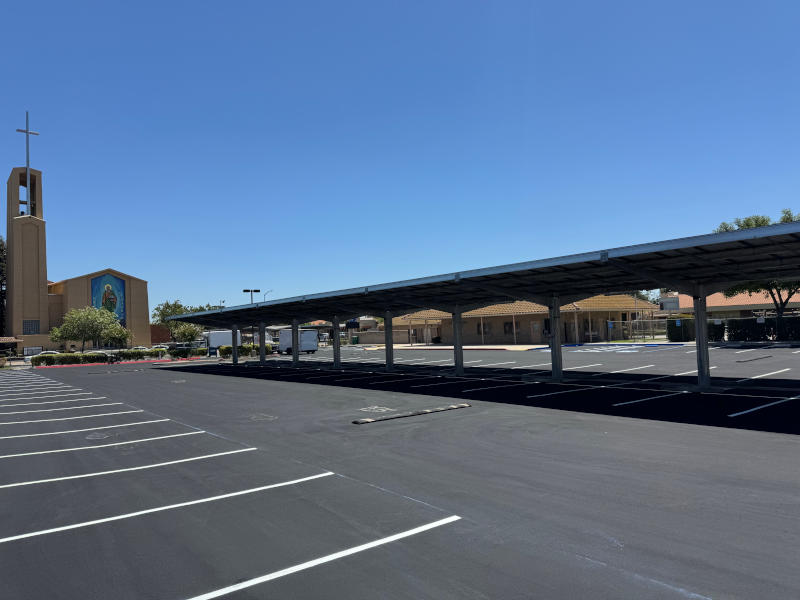
At some point, every commercial parking lot in Fresno needs repaving. The surface wears out. Cracks spread. Tenants start complaining. And the question shifts from “does this lot need work” to “how do I manage a repaving project without it turning into a headache.”
Repaving a commercial lot is a significant investment, and for property managers, it’s often one of the largest line items in a capital budget. Getting it right means more than just picking a contractor and signing a proposal. It means understanding the scope, making smart decisions about what the lot actually needs, planning around tenants and operations, and knowing what questions to ask before anyone fires up a paving machine.
This guide is for commercial property managers and decision-makers in Fresno and the surrounding Central Valley. It walks through the process from assessment to completion, with a focus on the practical decisions that determine whether a repaving project goes smoothly or turns into a budget problem.
Before you can decide what your lot needs, you need to know what you’re working with. Not every lot that looks bad needs a full tear-out and replacement. And not every lot that looks okay is actually in good shape underneath.
A qualified contractor should walk the lot and identify the type and extent of damage in each area. The key things to evaluate are surface cracking (type and severity), base condition (is the subgrade sound or compromised?), drainage (does water pool anywhere?), and curb and ADA infrastructure condition.
Core samples are essential. A core sample is a cylindrical section cut from the pavement that shows you the thickness of the asphalt layer and the condition of the aggregate base underneath. Without core samples, you’re guessing. And guessing is how property managers end up paying for a full replacement when an overlay would have worked, or paying for an overlay that fails in two years because the base was already gone.
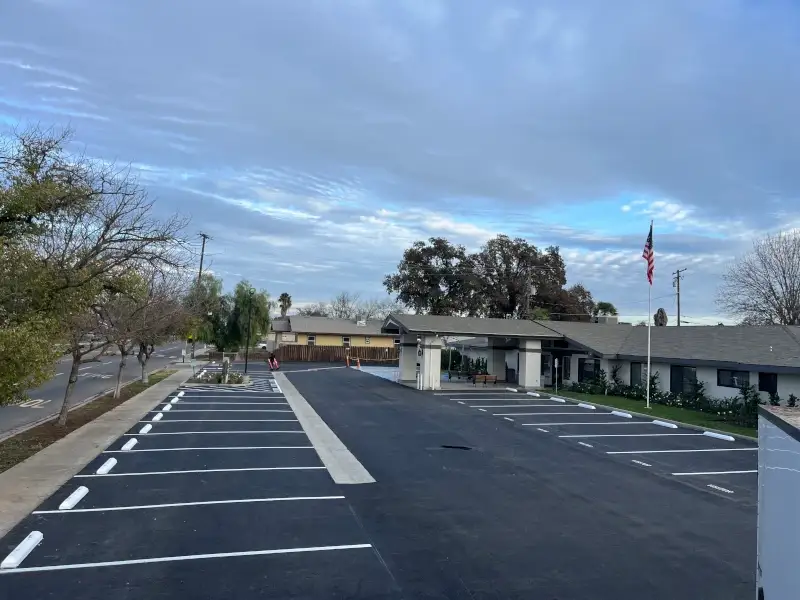
Depending on what the assessment reveals, your lot will typically fall into one of three categories.
Overlay. If the base is solid and the damage is mostly surface-level, you can add 1.5 to 2 inches of new asphalt on top of the existing surface. This is the fastest and most affordable option. It works well for lots that were originally built with a good base and have been reasonably maintained. Creative Asphalt’s overlay guide covers this in detail.
Mill-and-overlay. If the surface has moderate damage or you need to maintain existing curb heights and drainage grades, milling down 1 to 2 inches before placing the new asphalt is the better approach. This also creates a stronger bond between the old and new layers.
Full replacement. If the base has failed, you have widespread alligator cracking, recurring potholes, or drainage problems that stem from how the lot was graded, a full tear-out and repave is the only option that addresses the root problem. It costs more and takes longer, but it resets the clock.
Paving requires air temperatures above 50 degrees and preferably below 95 degrees. In Fresno, that means the ideal paving months are March through mid-June and late September through November. Summer paving is possible (and common), but crews need to start at dawn and manage material temperatures carefully when it’s 105 outside.
From a scheduling standpoint, spring is the best time to start the process. That doesn’t mean you need the project completed by June. It means you should be getting assessments and proposals in February and March, making decisions in March and April, and scheduling work for the window that makes sense for your property’s operations.
If your lot serves retail tenants, timing around their busy seasons matters. A repaving project during the holiday rush or back-to-school shopping will cause friction with tenants and customers. Talk to your tenants early and build the schedule around their needs when possible.
This is where most property managers feel the real pressure. A repaving project shuts down parking for some or all of the lot for several days. For a multi-tenant retail center or office complex, that directly impacts business.
The standard approach is phased paving, where the contractor works in sections so that a portion of the lot remains open at all times. A 100-space lot might be done in two or three phases, each taking one to two days. Tenants lose some parking temporarily but never all of it.
What to communicate to tenants before work starts: the schedule (specific dates for each phase), which sections will be closed when, where customers should park during each phase, expected noise and dust levels, and how long freshly paved sections need to cure before vehicles can park on them (typically 24 to 48 hours).
A good contractor will work around your operational needs. If a tenant has a major delivery day on Wednesday, that section shouldn’t be closed on Wednesday. This kind of coordination is worth discussing up front, not the morning the crew shows up.
Not all proposals are created equal. Here’s what to look for and ask about.
Did they core-sample the lot? Any contractor who quotes a repaving job without examining the base is giving you a price based on assumptions. Core samples cost very little and eliminate guesswork. If a contractor doesn’t offer this, ask why.
Does the proposal specify pre-paving repairs? Areas with base failure need full-depth patching before the overlay or new surface goes down. If the proposal skips this, the new surface will fail in those spots within a couple of years.
What asphalt mix are they using? In the Central Valley’s heat, the mix design matters. The binder grade should be appropriate for the temperature range. Ask what plant they’re sourcing from and what PG (Performance Grade) binder is in the mix.
Is drainage addressed? If your lot has standing water issues, repaving is the time to fix them. Proper grading during the paving process can correct drainage without major additional cost. If the contractor doesn’t mention drainage and you’ve seen ponding, bring it up.
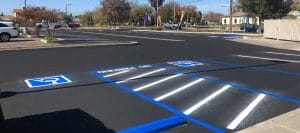
What about ADA compliance? In California, any project that constitutes a “path of travel” improvement triggers a requirement to spend up to 20% of the project cost on accessibility upgrades. That can include ADA ramp repairs, detectable warning surfaces, signage, and striping. Your contractor should know this and include it in the scope. If they don’t mention it, your property could be exposed to compliance risk after the project is done. Creative Asphalt’s maintenance services include ADA audits and signage.
What’s the warranty? Get the warranty terms in writing. A reputable contractor will stand behind their work. Ask what’s covered, what’s excluded, and for how long.
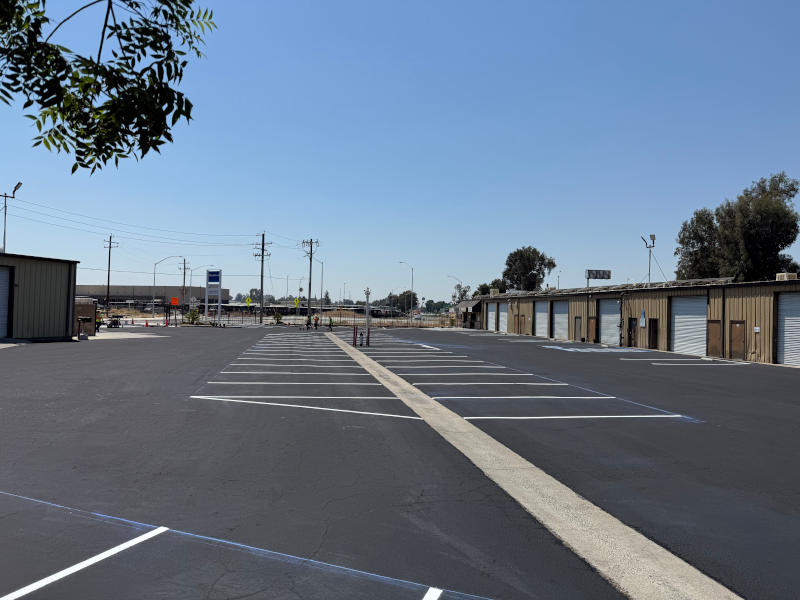
A repaving project is a major expense. Protecting that investment starts immediately and continues for the life of the surface.
Wait 3 to 6 months before sealcoating. New asphalt needs to cure before sealcoat can bond properly. In Fresno’s heat, curing happens on the faster end, but 6 months is still the minimum.
Start a regular maintenance program. Sealcoat every two years. Seal cracks as soon as they appear. Clean oil stains promptly. These small steps add years to the surface.
Keep records. Document when the lot was paved, what work was done, and when maintenance was performed. If you manage multiple properties, a maintenance log for each lot helps you plan and budget for future work instead of reacting to emergencies.
The Central Valley climate creates conditions that property managers in coastal California or cooler regions don’t deal with.
Extreme heat cycles. Fresno averages over 60 days per year above 100 degrees. That sustained heat softens asphalt binder and accelerates oxidation. It also means paving and sealcoating schedules need to account for temperature windows that don’t exist in milder climates.
Expansive soils. Parts of the Fresno area, particularly east of Highway 99 and through the older neighborhoods, have clay-heavy soils that expand and contract with moisture changes. If your lot is on expansive soil, base preparation is critical. Cutting corners on base work in these areas leads to premature pavement failure.
Low but impactful rainfall. Fresno only gets about 12 inches of rain per year, but when it does rain, it tends to come in concentrated storms. Parking lots with poor drainage take a disproportionate hit because the water sits instead of flowing off. Repaving is the best time to correct grading issues so water moves to inlets and away from buildings.
Tule fog. The fog season (typically late November through early February) isn’t just a driving hazard. It deposits moisture on pavement surfaces that can interfere with sealcoating and other surface treatments. Scheduling finish work outside of fog season avoids cure problems.
The smartest thing you can do before a repaving project is talk to a contractor who will walk your lot, take core samples, and give you an honest assessment of what you actually need. Not what costs the most. Not what costs the least. What makes sense for your specific property, budget, and timeline.
Creative Asphalt has been doing this work across Fresno County, Madera County, Kings County, and Tulare County since 2005. We handle commercial paving, asphalt repair, sealcoating, and parking lot maintenance, so you get one team that’s accountable for the whole project. Call 559-471-3642 and get a free estimate.