Spring Parking Lot Maintenance Checklist for California Businesses
Winter in the Central Valley isn’t brutal, but it’s harder on your parking lot than most property owners realize. A…
CA License #869767
Open Hours: Mon-Fri 8:00AM - 5:00PM
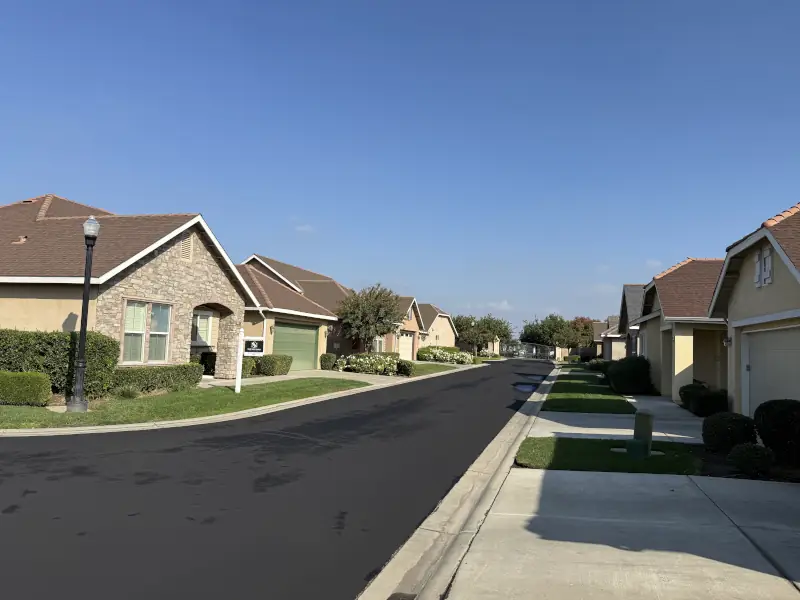
Sealcoating is one of the cheapest things you can do to keep a parking lot in good shape. It’s also one of the most frequently botched, and not because the product is complicated. The issue is timing. Apply it at the wrong time of year, on the wrong day, or on a surface that isn’t ready for it, and you’ve wasted the money.
In the Central Valley, timing gets tricky. The extreme heat that defines Fresno summers creates a narrow window where conditions are right. Too cold and the sealant won’t cure. Too hot and it dries before it bonds. And the Valley’s Tule fog season and occasional winter rain add another layer of scheduling pressure.
Here’s what property managers and business owners in Fresno, Clovis, Hanford, and across the Valley need to know about when and how often to sealcoat.
Before we talk about timing, it’s worth being clear about what sealcoating is for. Sealcoating applies a thin protective layer over asphalt that blocks UV rays, resists water penetration, and slows oxidation. It’s a maintenance treatment, not a repair.
It won’t fill potholes. It won’t fix base failure. It won’t stop alligator cracking from getting worse. If your lot has structural damage, that needs to be repaired first. Sealcoating goes on after repairs are done, to protect the good pavement you have left.
Think of it like sunscreen for asphalt. It only works if you apply it to healthy skin. And like sunscreen, you need to reapply it on a regular schedule.
Sealcoat needs specific conditions to cure properly. The air temperature should be at least 50 degrees and rising. The surface can’t be wet. And the sealant needs a minimum of 24 hours without rain, heavy dew, or extreme heat to set.
In the Central Valley, that narrows your best window to two seasons.
This is the sweet spot. Daytime temperatures in Fresno are typically between 65 and 95 degrees through this stretch, nighttime lows stay above 50, and rain is rare after mid-March. The sealant has warm, dry conditions to cure without the extreme heat that causes problems in summer.
Spring is also the practical best time because it gets your lot protected before the harshest UV months. The Central Valley sun from July through September is relentless. Getting sealcoat down in April or May means the surface is shielded before the worst exposure starts.
The second window opens once temperatures drop back below the triple digits. Late September through mid-November gives you another stretch of warm days, cool (but not cold) nights, and dry weather before the Tule fog and winter rain settle in.
The risk with fall is cutting it too close. If you’re scheduling for November, you need a few consecutive dry days with overnight temps above 50. Once Tule fog starts forming (typically late November into December), the morning moisture can interfere with cure times. And if an early Valley rainstorm hits before the sealant fully sets, it can wash it right off.
Fresno regularly hits 105 to 110 degrees in July and August. At those temperatures, sealcoat can flash-dry on contact. It sets on the surface before it penetrates and bonds to the asphalt underneath. The result is a sealcoat that looks fine for a month or two but starts peeling and flaking before the year is out.
Summer sealcoating is possible if crews start very early in the morning (before 7 AM) and work while the pavement surface is still cool. But it’s a tight window, and even then, surface temperatures on a blacktop lot can hit 140 degrees by mid-morning. It’s not ideal.
The standard recommendation nationwide is every two to three years. In the Central Valley, lean toward the shorter end of that range. The combination of 100+ summer days above 90 degrees, intense UV exposure, and the occasional winter moisture cycle puts more stress on sealcoat than most climates.
For a commercial parking lot that sees regular daily traffic, every two years is a reasonable baseline. Lots with heavy truck traffic, drive-throughs, or high-volume retail may need it closer to every 18 months in the most sun-exposed sections.
The visual check is simple. When the lot surface shifts from black to gray, the sealcoat has worn down and the asphalt binder is starting to oxidize. That’s your cue to schedule the next application.
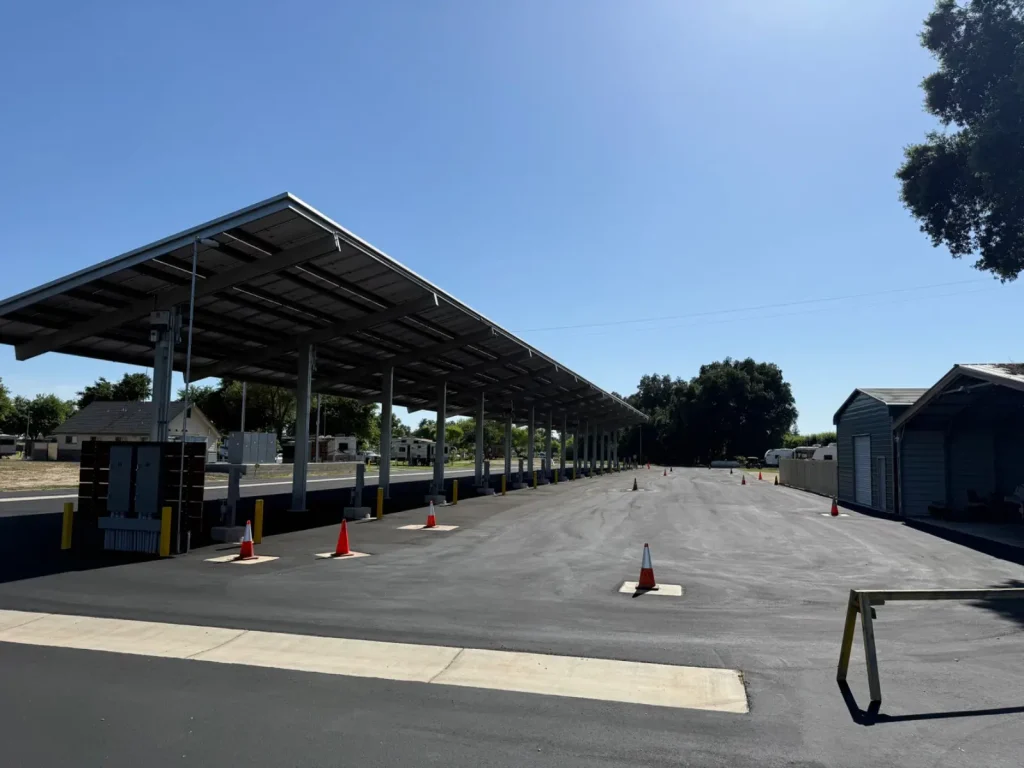
If you’ve recently had a new lot paved or an overlay installed, don’t sealcoat immediately. New asphalt contains light oils that need to evaporate before a sealcoat can bond properly. If you seal too early, you trap those oils and the sealcoat won’t adhere.
The standard rule is to wait at least 6 months, and ideally a full year, before the first sealcoat application. In the Central Valley’s heat, that curing process can happen a bit faster, but 6 months is still the minimum.
A sealcoat is only as good as the surface it’s applied to. Here’s what should happen first.
Crack sealing. Any cracks wider than a quarter inch should be cleaned out and filled with hot-pour crack sealant before sealcoating. Sealcoat alone won’t bridge cracks. If you skip this step, water continues to get into the base through those cracks, and you’ll get base failure underneath a surface that looks brand new.
Patching. Potholes and areas with alligator cracking need to be cut out and patched with hot-mix asphalt. Sealcoating over a pothole is a waste of material.
Cleaning. The surface needs to be swept clean and free of oil stains, dirt, and debris. Oil spots in particular will prevent the sealant from bonding. Heavy oil stains may need an oil-spot primer before sealcoating.
Edging and detail work. Around curbs, drainage inlets, utility covers, and building edges, the sealcoat needs to be cut in cleanly. Sloppy application around these details is the mark of a crew cutting corners.
| Season | Conditions | Recommendation |
| Late March – Mid-June | 65-95°F days, lows above 50°F, dry | Best window. Schedule here if possible. |
| July – Early September | 100-110°F+, surface temps over 140°F | Risky. Early AM only. Flash-drying common. |
| Late September – Mid-November | 75-95°F days, lows above 50°F, dry | Good second window. Watch for early fog. |
| Late November – February | Tule fog, rain, lows below 50°F | Not recommended. Cure issues likely. |
Sealcoating a 50,000-square-foot commercial lot typically costs a few thousand dollars. Skipping it doesn’t save you that money. It just shifts the cost into the future and makes it bigger.
Unprotected asphalt in the Central Valley oxidizes faster than almost anywhere in California. Within three to four years without sealcoat, the surface turns gray and brittle. Cracks form. Water gets in. The base starts to soften. At that point, you’re not talking about a sealcoat anymore. You’re talking about asphalt repair, and possibly milling and resurfacing, which costs five to ten times what the sealcoat would have.
A consistent sealcoat schedule is one of the simplest ways to protect your investment. It’s not exciting, but it works.
If your parking lot is due for sealcoating, or if you’re not sure when it was last done, it’s worth getting a professional assessment. Creative Asphalt works with commercial property owners across Fresno County, Madera County, Kings County, and Tulare County. We’ll look at the surface condition, recommend the right timing, and handle the prep work so the sealcoat actually lasts. Call us at 559-471-3642 and get a free estimate. We’ll tell you what your lot needs and when to do it.