Asphalt Overlay vs Full Replacement: A Guide for Fresno Home and Business Owners
Your parking lot is starting to show its age. Cracks are spreading, the surface looks faded, and you're getting complaints…
CA License #869767
Open Hours: Mon-Fri 8:00AM - 5:00PM
Winter in the Central Valley isn’t brutal, but it’s harder on your parking lot than most property owners realize. A few months of cool nights, soaking rain, and fog sitting on the surface, followed by a fast jump into 90-degree days, is exactly the kind of cycle that pulls pavement apart.
Spring is the window to catch problems before summer locks them in. By July, when surface temperatures in Fresno and the surrounding areas regularly push past 140 degrees, small cracks turn into big ones and minor drainage issues become base failures. The work you do in March, April, and May decides how your lot looks and holds up for the rest of the year.
Here’s what to walk through before summer hits.
Before you call anyone or budget anything, walk the lot. Not a quick scan from the front door. An actual walk, preferably right after a rain so drainage problems show themselves.
Look for:
Take photos. Note locations. This is the document you’ll work from for the rest of the season, and it’s what a contractor needs to give you an accurate estimate.
Debris is easy to ignore and easy to fix. Leaves, dirt, and gravel trap moisture against the asphalt and grind at the surface every time a car drives over them. In the Valley, agricultural dust also settles into cracks and accelerates deterioration.
A good power sweep before any inspection or repair work makes everything else more effective. You’ll also spot issues you couldn’t see under a layer of grime.
Every crack is a path for water to reach the base layer underneath. Once water gets down there, it softens the sub-base, the pavement flexes under traffic, and cracks spread into alligator patterns. That’s when you stop talking about crack filling and start talking about full-depth repair.
Spring is the right time to seal cracks because the pavement isn’t expanding in summer heat or contracting on a cold morning. Temperatures between 50 and 80 degrees give the sealant the best chance to bond properly.
If cracks are widespread or you’re seeing alligator patterns, asphalt repair is the next step. Skin patching, saw-cut removal, and full-depth replacement each have their place depending on how deep the damage goes.
Fresno averages just over 12 inches of rain a year, and most of it arrives between December and March. That’s not a lot by national standards, but it’s enough to expose every low spot and clogged drain on your property.
Walk the lot during or right after a rainstorm and mark anywhere water sits for more than a day. Standing water is the single fastest way to shorten the life of asphalt. It softens the base, accelerates oxidation, and creates ice risk the few times a year temperatures dip.
Clean out catch basins, check that drains are flowing, and note any areas where grading may need correction. Regrading is a bigger project, but catching it now beats discovering it after a summer of pavement failure.
If your parking lot hasn’t been sealed in two or three years, spring is when you want to get on the schedule. Sealcoating protects the asphalt binder from UV damage, oxidation, and chemical spills. In a climate that delivers 60 or more days of triple-digit heat, that protection matters.
The timing window is narrower than people expect. Sealcoat needs daytime temperatures consistently above 50 degrees and no rain for at least 24 hours after application. In Fresno, that usually means late March through early June is the sweet spot. Push it into July or August, and surface temperatures make application trickier. Wait until fall, and you’re racing the first rains.
Book early. The calendar fills up fast once the weather turns.
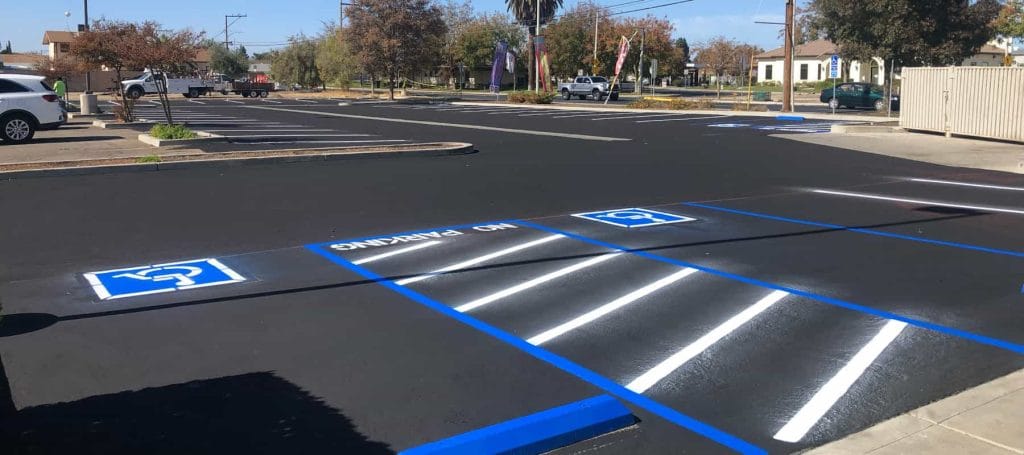
Striping is the last step, not the first. If you’re sealcoating, stripe after it cures. If you’re not, at least address any cracks or patches before repainting over them, or you’ll be restriping again in a year.
Faded lines affect more than appearance. ADA-compliant markings, fire lanes, accessible parking designations, and directional arrows are liability issues if they’re not legible. For healthcare facilities, retail centers, and multi-tenant properties, this is worth getting right the first time.
| Task | Why It Matters | Timing |
| Walk the lot and document issues | Winter rain and heat cycling cause problems you won’t catch from your office window | Early spring |
| Sweep and clear debris | Leaves, dirt, and gravel hold moisture against the surface and accelerate wear | Before any inspection |
| Address cracks over 1/4 inch | Open cracks let water into the base, which is where real damage starts | March to May, before heat sets in |
| Patch potholes and alligator cracking | Small failures become full-depth repairs if ignored through summer | As soon as you spot them |
| Clean and reset drainage | Standing water is the fastest way to shorten pavement life in the Valley | Early spring |
| Sealcoat if due (every 2–3 years) | UV and heat break down binder; seal protects before summer | April through early June |
| Restripe fading lines and ADA markings | Faded striping creates liability and looks neglected to tenants and customers | After sealcoating cures |
| Check bumpers, signs, and speed bumps | Small hardware items affect safety and ADA compliance | Anytime in spring |
Different properties have different priorities in spring. Property managers running multi-site portfolios usually need to sequence work across several locations, which means getting on a contractor’s calendar before the rush.
HOAs are often working against reserve fund timelines, so aligning the board’s decision cycle with the short spring window takes planning. Healthcare facilities and retail sites with heavy daily traffic need work scheduled around operating hours, which also takes lead time.
Whatever the property type, the common thread is timing. Spring is short. Summer arrives quickly. The lots that hold up best are the ones that get walked, assessed, and worked on before the heat settles in.
The math on parking lot maintenance is pretty consistent. A sealcoat and crack seal every two or three years, plus small patch work as needed, runs a fraction of what it costs to resurface or rebuild a lot that’s been let go. Good base work and timely maintenance is the difference between pavement lasting 20 years and 10.
It’s basically insurance. The lot in front of your business tells customers and tenants how the rest of the property is run. Fading, cracked, potholed asphalt sends a message you probably don’t want sending.
If you’re looking at your lot and not sure what it needs, we’re happy to walk it with you. We’ve been working on parking lots across Fresno, Madera, Kings, and Tulare counties for years, and we’ll give you a straight answer on what’s urgent, what can wait, and what it’ll cost. Get in touch for a free estimate before the spring calendar fills up.